Local News
A poll worker's mark won't void your Gwinnett County ballot
Gwinnett voters mark, print, review, and scan their own ballots, so a poll worker's stray mark does not disqualify a vote.
By Staff · October 15, 2026
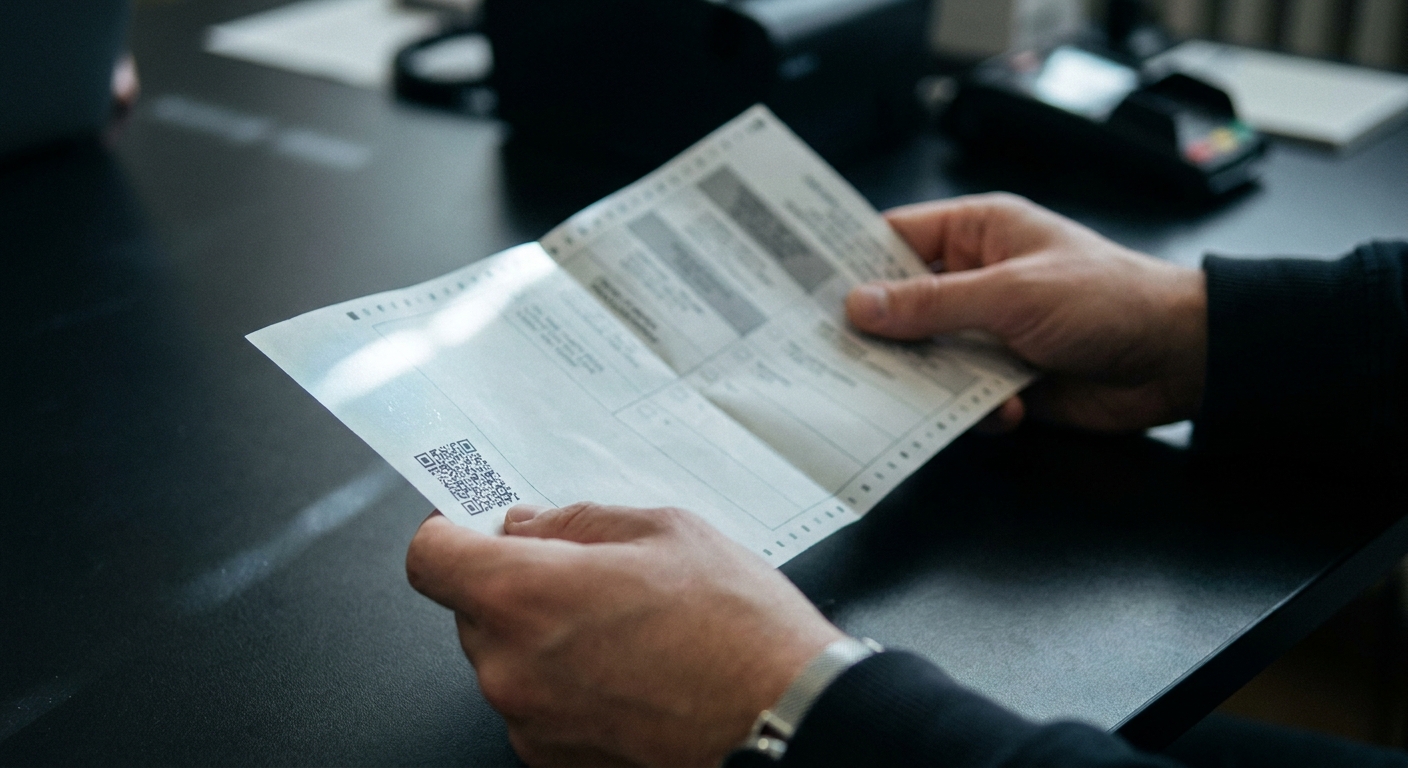
Maybe you heard it from a neighbor on the Square, in a neighborhood Facebook post, or in the checkout line at the grocery store: if a poll worker marks your ballot — any letter, checkmark, star, or an added "R" or "D" — your vote is thrown out. It is not true. In a Gwinnett County polling place, the steps that decide whether your vote counts are in your own hands.
For anyone about to vote in person in Lawrenceville or elsewhere in Gwinnett County, here is exactly what happens to a ballot from start to finish — because at every step that matters, you are the one doing the work.
How a Gwinnett ballot actually moves
At a Gwinnett County polling place, an in-person voter marks their ballot on a touchscreen ballot-marking device, the Dominion ImageCast X. That machine prints the voter's selections onto a paper ballot. The touchscreen itself does not store the voter's choices as the official vote; the printed paper is what matters going forward. The Georgia poll worker manual directs poll workers to step back from the booth before the voter makes selections, and says workers may not mark, change, or direct a voter's choices.
After marking, the voter prints and removes the paper ballot themselves and is directed to review it before scanning. A poll worker may verbally point the voter toward this review step, but the voter — not the worker — does the reviewing. The printed ballot carries both a QR code that encodes the voter's selections and human-readable text listing the choices, so the voter can read what was printed and confirm it matches what they tapped on the touchscreen.
A change in state law this year extends how long Georgia will tabulate by QR code. Senate Bill 3EX, signed by Gov. Brian Kemp on June 25, 2026, moved the phase-out of QR-code ballot tabulation from the prior July 1, 2026 deadline to Jan. 1, 2028, so 2026 ballots continue to be tabulated by QR code.
Once the voter has reviewed the paper ballot, the voter — not a poll worker — inserts it into the Dominion ImageCast Precinct scanner. That scanner tabulates the ballot and drops it into a locked box kept for later audits, meaning the last action before counting is the voter's own hand.
What poll workers do — and don't — write on
A poll worker's actual job is narrow: handing over the voter-access card, showing how the device works, helping insert the card, answering questions, and pointing the voter to review the printed ballot before scanning. This year brought one new piece of writing at the check-in desk: under a Georgia State Election Board rule effective July 19, 2026, poll workers record each checked-in voter's name in ink on a numbered list of voters — a separate paper list, not the ballot itself.
Bartow County elections director Joseph Kirk, speaking about that new sign-in rule, said, "This is a very small part of the process, this does not affect your ballot, it doesn't make anything public record that's not already public record." Kirk added, "This is nothing new, we're just recording the information in a different way."
A poll worker touching, initialing, or noting a ballot does not cancel anything, and fact-checkers at Snopes reached the same conclusion, rating the claim false: a ballot counts unless markings make the voter's own choices unreadable. Kelvin Williams, the acting elections supervisor of the Gwinnett County Department of Voter Registrations and Elections, said the county has trained roughly 2,000 election officials for this cycle. Williams also reminded Gwinnett voters that they may bring a paper sample ballot into the booth, though cellphones are not allowed.
What happens if there's a mistake
If, while reviewing the printed ballot, a voter sees it does not show the right selections or is the wrong ballot, the voter should tell a poll officer right away — before scanning it. Under Georgia rule 183-1-12-.11, the poll officer must then spoil, or cancel, that paper ballot and let the voter mark their selections again and receive a correct ballot. Gwinnett County's own election guidance says a voter with a mistake should not erase or cross anything out, but should have the ballot spoiled and request a replacement.
The catch is timing: once a ballot goes into the scanner or ballot box it is deemed cast and is too late to spoil. So a voter who wants a do-over must speak up before scanning — meaning an honest mistake never silently costs the vote, but it has to be caught in the booth.